
A back garden in Moston had been left so long that nobody could use it. We have now made three visits, and a fourth is booked. The first brought the garden back under control, the second cut back thin shrubs that were pushing onto the neighbours, and the third uncovered a paved area nobody knew was there. This is how a phased garden clearance in Manchester works in practice, and what each visit did.
The job at a glance: three visits so far, one more booked
The homeowner asked us to deal with a back garden in Moston, north Manchester, that had been neglected for a long time. The work has been done as separate visits, and every visit has had one clear aim. The table is the whole job in one place. Everything in it comes from our job notes and the photographs on this page.
| Visit | What we did | Why at this point |
|---|---|---|
| 1. Initial clearance | Cleared a severely overgrown, neglected garden and brought it back under control | Nothing else can be judged until the ground is visible and safe to walk on |
| 2. Shrubs and general clearance | Cut back tall, thin shrubbery and cleared and tidied the rest of the garden | The shrubs were threatening to damage and push into neighbouring properties |
| 3. Maintenance and a hidden patio | General maintenance, then found and cleared a paved area that had been buried | With the overgrowth gone, the old hard surface could finally be seen and cleared |
| 4. Booked, not yet done | Tidy the borders, remove weeds by hand, apply a general weed treatment, and tidy the front driveway | The big clearing is finished, so this visit is about keeping it that way |
Every RGMS quote is based on the size of the garden and the state it is in, which is why we ask for photos first.
What we found at the start
The back garden was a classic case of a space that had been left until it was too much to face. Grass, brambles and self-sown shrubs had grown through each other, the old paving along the house wall was hidden, and there was no sensible place to stand and work out what to do. The homeowner could not use the garden and could not easily judge how big the job was.
That is a common starting point. A garden like this is not usually unsafe or beyond saving, but it is bigger than one afternoon of effort and it hides things: paving, edges, drains, old fence lines and sometimes rubbish. Our job on the first visit is to open it up so everything afterwards is a decision made on what is really there, not a guess.
Visit 1: bring the garden back under control
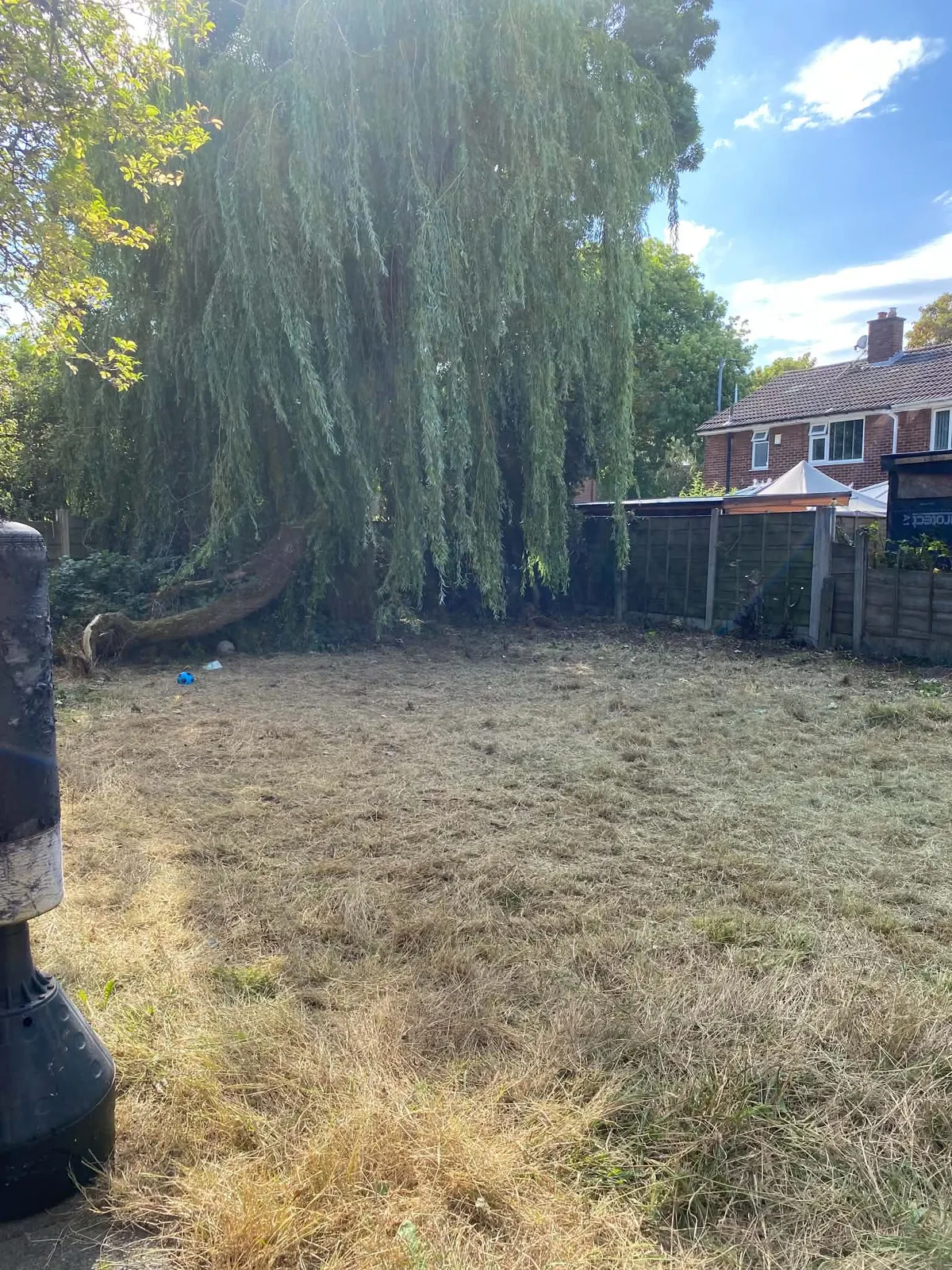
The first visit, in late August 2026, was a straight clearance. The aim was not a finished garden. It was a garden you could walk across, with the lawn area cut and the worst of the overgrowth gone, so the next visits had something to build on.
Two ideas guide how we approach the grass in a garden like this. The Royal Horticultural Society (RHS) advises that when a lawn is very long you may need to strim it first, rake off the cuttings, then mow on the highest setting, and that you should not take off more than about a third of the height in one go. A first cut therefore looks rough and yellow, and it greens up with regular cutting afterwards. Read the RHS guide to how to mow a lawn before judging an overgrown lawn by its first cut, because that dry, stubbly look in the photos is normal for the end of a first visit.
The same guidance tells you to check for wildlife before cutting long grass, because hedgehogs, toads and others shelter in it. It is worth doing before any long-grass cut, whoever does it.
What the first visit gives the homeowner is a baseline. Once the ground is visible, you can see where the lawn really ends, where the borders start and which of the trees and shrubs are worth keeping. If you want our help with a similar job, the page on garden tidying and clearance explains what is included and how to get a quote.
Visit 2: cutting back shrubs before they cause damage
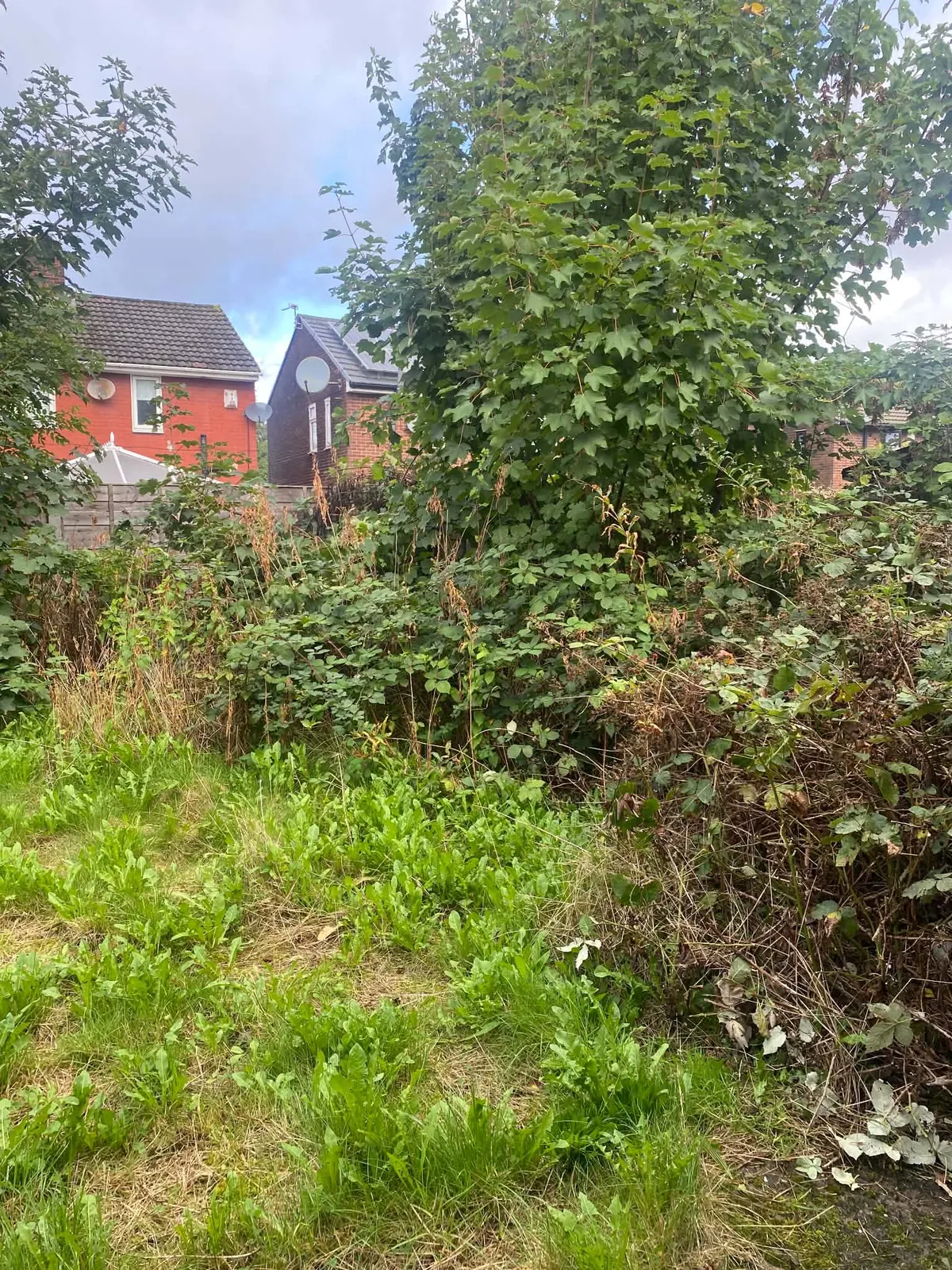
By the second visit the garden was visible, and the next problem was clear. Along the boundary stood tall, thin shrubs that had grown leggy because nobody had ever pruned them. Left alone, shrubs like that lean, spread and push into the neighbouring gardens and, in time, onto fences and outbuildings. We cut them back and carried on with general tidying and clearance across the rest of the garden.
There are three things worth knowing if you are in the same position, whichever side of the fence you are on.
- Your plant, your job. Shrubs growing in your own garden are your responsibility, including what they do to a neighbour. Cutting them back is both the neighbourly thing and the sensible one.
- A neighbour's overhang is different. The guidance from GOV.UK on high hedges, trees and boundaries and from Manchester City Council on problems with trees is that you may cut back branches that cross your boundary, but only from your own side, and you should ask whether the neighbour wants the cuttings. Trees with a Tree Preservation Order, or in a conservation area, need permission first.
- Look for nests before you cut. Under section 1 of the Wildlife and Countryside Act 1981 it is an offence to intentionally damage or destroy a wild bird's nest while it is in use or being built. Spring and summer carry the highest risk, so check shrubs by eye before any cut and stop if a nest is in use.
Brambles are the other thing that turns up in gardens like this one. The RHS advice on brambles and other woody weeds is to cut the stems back to about 30 cm, clear them, then dig out the main stump and as many roots as you can, and keep watching for regrowth. Brambles root where the tips touch soil, so a bramble patch is never quite a one-visit job. That is one of the reasons we prefer to return a few times rather than promise a perfect result in a single day.
For help with this kind of work, see our service pages for shrubs and plants and hedge services.
Visit 3: maintenance, and a patio nobody knew was there
The third visit combined general garden maintenance with a discovery. While clearing, we found a hard-surfaced area that had been completely hidden by growth and debris, and we cleared it. It gives the homeowner somewhere to sit out on a nice day, which is the point of the garden in the first place.
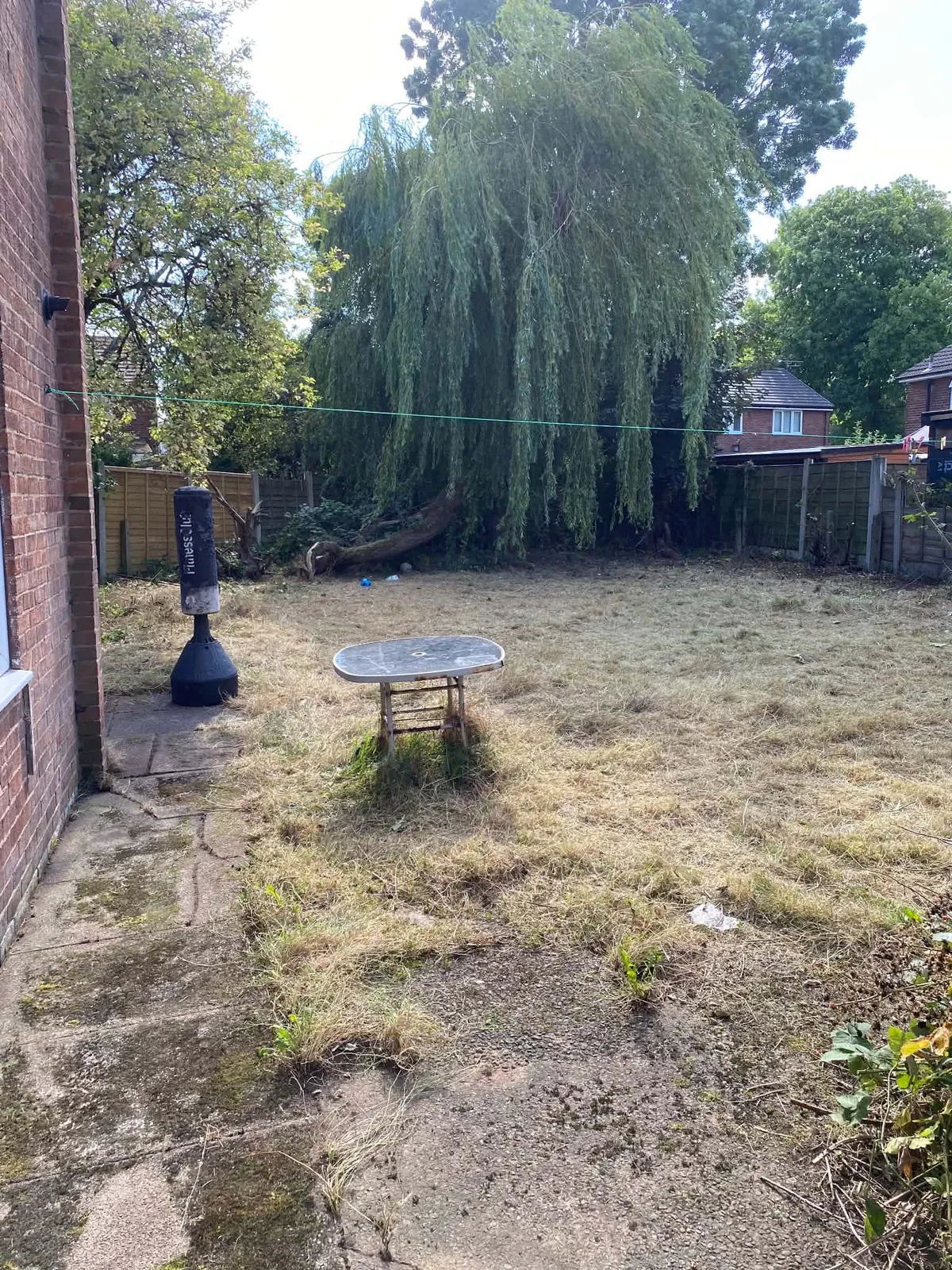
This is the biggest argument for clearing in stages. Hard surfaces are easy to miss under years of growth, and once they are exposed they change the plan. A patio nobody knew about means the lawn does not have to carry the seating, and the borders can be shaped around it. We could not have written that into a single upfront quote, because nobody knew the patio was there.
A cleared old surface will usually need a further clean before it looks its best, since moss, algae and soil build up on paving that has been shaded for years. Our hard surface cleaning service covers patios, paths and driveways, and the front driveway on the next visit is where that kind of attention begins.
When clearing in stages makes sense
Working in visits suits a garden where you cannot see everything at the start. A single quote for an overgrown garden has to allow for the unknown, whether or not it turns up. Visits with a clear aim each remove that guesswork for both sides.
Whether this suits you depends on the garden. The checklist below is how we decide, and you can use it on your own garden before you ask anyone for a quote.
- Can you see the whole garden?
If walls, paving and edges are hidden, a phased price is usually fairer than a single figure.
- Is anything growing into a neighbour's property?
Deal with that early, because it is the part that can cause a dispute or damage.
- Do you want to keep any of the plants?
Decide before the first visit. A clearance cannot be undone.
- Is there a deadline?
An event or a house sale favours one large visit. A garden you want to enjoy next summer can be done in stages.
- Will it be kept up afterwards?
A cleared garden that is left again goes back to where it was within a season. Plan maintenance before you finish clearing.
For the general factors behind any quote, read what affects the cost of property maintenance in Manchester. We do not quote without seeing the garden, so send photos and a postcode through the form below and we will tell you honestly whether one visit or several makes sense.
What is next: keeping it cleared
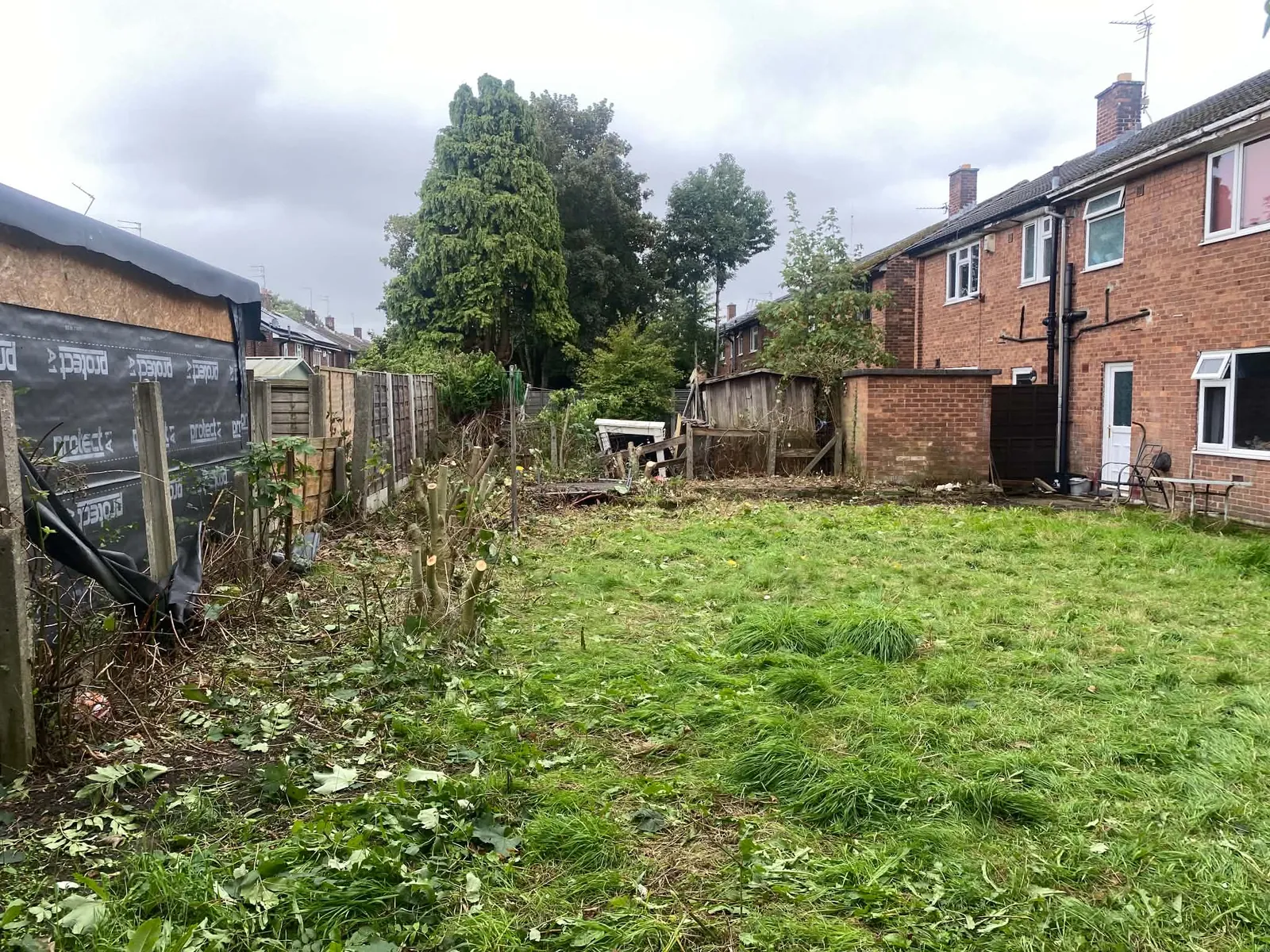
The fourth visit is booked and has a different character from the first three. It is about holding the ground that has been won. It covers tidying the existing borders, removing weeds by hand and applying a general weed treatment, and giving the front driveway some long overdue attention.
Pulling weeds by hand removes them with their roots and is gentle on the plants you want to keep, and a general weed treatment then deals with what is left. The RHS publishes its own guidance on weeds and how to control them, and it generally recommends non-chemical methods first. If a treatment is used, the product label is the instruction and we follow it, including keeping it off lawn and wanted plants. See our weed control page for how we handle it.
After that comes the question every cleared garden raises: who looks after it now? For this garden the answer is regular, smaller visits through the growing season, with the lawn cut and the borders kept clean. That is a lot cheaper than a second clearance in two years' time. Our garden care and lawn services pages explain how regular visits work.
What this job shows if your garden is in the same state
A garden does not have to be cleared in a day to be rescued. Some of the points from this job apply to almost any neglected garden in Manchester or Stockport.
- Start with access and sight lines. Cut the big growth first so you can see what is under it. Then decide what to keep.
- Do the neighbour-facing work early. Shrubs and brambles reaching over a fence are the thing most likely to turn a tidy-up into an argument.
- Expect the first result to look rough. A freshly cut lawn after a long period of neglect is yellow and uneven. It improves with cutting.
- Leave room for surprises. Buried paving, old edging and forgotten features are common, and they are often the best part of the garden.
- Plan the afterwards. A garden that is kept up costs less over time than one that is cleared and then left.
You can see more finished work, with before and after photographs, on our gallery, and read what customers say on the reviews page. We work across Manchester and Stockport, and you can meet the team or read our frequently asked questions before you get in touch.
If your garden looks like the first photograph on this page, the next step is simple. Send us a few photos and your postcode and we will tell you what we would do first. Our garden tidying and clearance service is quoted free, with no obligation.
Overgrown garden clearance questions
How do I get a quote for an overgrown garden?
Send RGMS a few photos and your postcode through the quote form. We tell you what we would do first and quote it, free and with no obligation. The price of any clearance depends on size, how overgrown the garden is and how much has to be taken away. Read what affects the cost of property maintenance for the factors.
Is it better to clear an overgrown garden in one go or in stages?
It depends on what you cannot see. If you can see the whole garden and have a deadline, one visit may suit. If paving, edges and boundaries are hidden under growth, stages let each visit respond to what turns up, as the buried patio did here.
Can I cut back my neighbour's overhanging branches?
Generally you may cut branches that cross your boundary back to the line, working only from your own side, and you should ask whether your neighbour wants the cuttings. If the tree has a Tree Preservation Order or is in a conservation area you need permission first. Check Manchester City Council's guidance on trees before you start.
Will my lawn recover after a clearance?
Usually yes. The RHS advises mowing a very long lawn on the highest setting and lowering the height over several cuts, so the first result looks rough and yellow and improves with regular cutting. See the RHS guide to mowing a lawn.
Do you work in Moston and north Manchester?
Yes. RGMS works across Manchester and Stockport. See our Manchester coverage or send photos and a postcode through the quote form.
Sources
- RGMS job notes and site photographs for the Moston garden, supplied by the RGMS team in October 2026, for the visit details and dates.
- RHS: How to mow a lawn, for strimming and raking very long grass first, using the highest mower setting, removing no more than a third at once, and checking for wildlife.
- RHS: Brambles and other woody weeds, for cutting stems back, digging out roots and watching for regrowth.
- RHS: Weeds, for controlling weeds in gardens, with non-chemical methods first.
- GOV.UK: Resolving neighbour disputes, high hedges, trees and boundaries, for overhanging branches and the boundary.
- Manchester City Council: Problems with trees, for cutting branches back from your own side and offering the cuttings to the neighbour.
- Wildlife and Countryside Act 1981, section 1, for the offence of damaging or destroying an active wild bird's nest.