
Your tenancy agreement decides, and when it says nothing the usual practice is that the tenant keeps the garden tidy and the landlord deals with trees, big hedges and anything structural. This guide shows who normally does what, how to read your own agreement and how to avoid a deposit dispute at the end. If you are a landlord who would rather have the garden handled, our property support service works with landlords, letting agents and managers across Manchester and Stockport.
What the law says, and what it leaves out
The main statute for repairs in rented homes is section 11 of the Landlord and Tenant Act 1985. It makes the landlord responsible for the structure and exterior of the home, including drains, gutters and external pipes, and for the water, gas, electricity, sanitation and heating installations. It does not mention lawns, borders, shrubs or hedges.
GOV.UK lists the same landlord duties in plain English: the structure and exterior, fire safety, sanitary fittings, heating and hot water, gas and electrical wiring. It adds that tenants should only carry out repairs if the tenancy agreement says they can, and that you cannot be forced to do repairs that are your landlord’s responsibility.
So for the garden itself, the agreement does the work. The National Residential Landlords Association (NRLA) says tenants are usually responsible for basic upkeep unless the agreement says otherwise, and that landlords usually look after trees, climbing plants and larger shrubs and hedges. It also calls the hedge question a grey area, which is why a written clause matters.
One update worth knowing. GOV.UK says assured periodic tenancies replaced assured shorthold tenancies on 1 May 2026. Older guides, and older agreements, still talk about an “AST”. The garden question works the same way: read the clause in the agreement you actually signed.
Who does what: the usual split
This table shows the split most agreements and landlord guidance follow. It is a starting point, not a legal ruling. Where your agreement says something different, the agreement wins.
| Job | Usually the tenant | Usually the landlord | Why |
|---|---|---|---|
| Mowing the lawn | Yes | Only if the rent or agreement includes it | Basic upkeep, per the NRLA |
| Weeding and watering | Yes | No | Basic upkeep, per the NRLA |
| Pruning shrubs in borders | Yes, light pruning | Large or overgrown shrubs | Size and skill involved |
| Large hedges and clippings | Only if the agreement says so | Usually yes | Often a grey area, so check the clause |
| Trees and climbing plants | No | Yes | Safety and specialist work |
| Fences, walls, paving, decking | No, but report damage | Usually yes | Often treated as exterior repairs, so check the clause |
| Altering the garden or removing plants | Not without consent | Gives or refuses consent | The NRLA’s model clause |
| Tools and mower | Your own, unless supplied | No legal duty to provide them | NRLA guidance |
Fence, wall and paving repairs depend on whether the item counts as part of the “exterior” under section 11 and on what the agreement says. If a landlord disputes it, the council’s environmental health team or an independent adviser such as Shelter or Citizens Advice can help you read the position.
If the agreement says nothing about the garden
The NRLA’s guidance is that where the garden is not mentioned, it is implied that the tenant returns the garden, like the rest of the property, in the same condition as at the start, allowing for seasonal growth. In practice that means the tenant cannot let it run wild, and the landlord cannot expect a better garden than they handed over.
That is why the start of the tenancy matters more than the end. The photos on the check-in report are what an adjudicator compares against later. Look at the front, back and sides before you sign, and ask for anything unclear to be added in writing.
- Find the garden clause.
Look for words like “garden”, “grounds”, “lawn” or “hedges” in the tenant’s obligations. Note who is named for each.
- Check the inventory photos.
Are the lawn, borders, paving and boundaries shown front, rear and side? If not, take dated photos yourself in the first week and send them to the landlord or agent.
- Ask about the grey areas in writing.
Hedges taller than you can reach, overhanging trees and fences are the usual arguments. A short email now settles them.
- Agree what tools are provided.
There is no legal duty on a landlord to supply a mower, so if you need one, ask before moving in.
- Report damage and hazards early.
A rotten fence panel, a split paving slab or a dead branch over the path is a repair or safety matter for the landlord, not a gardening job for you.
- Keep a photo diary through the year.
One photo a season is plenty. It shows the garden was kept up and what seasonal growth looked like.
Gardens and deposit disputes
Gardens are a common reason for a deposit argument. The NRLA says garden disputes make up between 12 and 15 per cent of all tenancy disputes, and that around 4,500 disputes a year are adjudicated across the UK. Those figures come from a May 2022 NRLA bulletin, so treat them as an indication of scale, not a current count.
The same guidance describes what usually goes wrong: overgrown lawns and borders, plants moved or pruned too hard, and landlords expecting a garden in better condition than it started. It points out that plants die in heatwaves and sometimes simply age, and that a landlord should allow for seasonal growth when comparing check-in and check-out.
Your deposit has to be protected. GOV.UK says the landlord or agent must put it in a government-approved scheme within 30 days of getting it, and must return it within 10 days of you both agreeing how much you will get back. If you disagree, the deposit stays protected in the scheme while the dispute is settled.
The NRLA also says a landlord must give at least 24 hours’ notice before an inspection, and that around one in five landlords do not look at outdoor areas during mid-term visits. If you are a tenant, offering to walk the garden with them once or twice a year heads off most surprises.
Do not hand back a garden you could not have fixed. If the work is beyond a tenant, such as removing a large overgrown hedge, felling a tree or clearing years of waste, ask in writing whose job it is before the check-out, not after.
A garden dispute, decided
The NRLA guide includes a case study that shows how an adjudicator reads a garden. The deposit was £875 and £319 was in dispute. The tenant accepted that the back garden needed some work but said gardens always change as plants grow.
| Evidence | What it showed |
|---|---|
| Check-in report | Front and rear garden recorded as in “good seasonal order”, with slight overgrowth on the front hedge and rear lawn and a few weeds in the borders |
| Check-out report | Both gardens “overgrown”, with weeds, a patchy lawn and a patio marked with crayon |
| The quote | £290 to trim hedges, mow lawns, tidy borders and remove weeds and marks |
| The season | The tenancy began in autumn and ended in summer, so some growth was allowed for |
| The decision | The tenant was responsible for returning the garden to its original seasonal order. The landlord was awarded 70 per cent of the amount claimed, and the £100 the tenant had already agreed counted towards it |
Three lessons follow. The check-in photos set the baseline, so good ones help both sides. A tenant who agrees the garden slipped can still argue the price down by pointing to seasonal growth. And a landlord who claims the full cost of a perfect garden may not get it.
The NRLA also notes that tenants must ask for permission before changing the garden. If they re-landscape without asking, the landlord can charge to put it back. A landlord who is open to sensible changes, such as new shrubs or a refreshed lawn, often ends up with a better garden for the next tenant too. Weeds on paths and patios are a common sticking point, and our weed control service handles them.
What this means for the garden at this time of year
Autumn is when gardens start to look different from the check-in photos. Leaves cover the lawn and paths, the last mow of the year comes and growth stops. A tenant who keeps the lawn cut, clears the leaves from paths and keeps the borders free of weeds is meeting the usual expectation. Our autumn lawn care guide covers which jobs are worth doing now and which can wait.
Leaves and cuttings need somewhere to go. Recycle for Greater Manchester says all of its councils collect food and garden waste, and lists twigs and sticks no thicker than your wrist as acceptable, with no soil. Stockport Council says you need a garden waste permit to put garden waste in the green bin, and that branches must not be thicker than 10cm or your wrist. Ask the landlord or agent whether the property already has a permit before you buy one. If you are in Stockport, that is the council to check.
For a gap between tenants, there is no tenant to keep the garden, so a landlord who wants it presentable for viewings and the next check-in photos has to arrange it. A one-off tidy at changeover is the simple answer.
If you are the landlord: three ways to settle it
- Write the clause once. The NRLA recommends a specific garden clause that says the garden is returned in the same condition as at the start, allowing for seasonal change, how borders, lawn and paving are to be kept, and that the tenant may not alter the garden or remove plants without consent.
- Take the garden back. The NRLA notes that landlords with several gardens can employ a gardener and include the cost in the rent. Then no one argues about the mowing.
- Book it as a handover task. Between tenants, a clear-up, a hedge cut and a lawn cut means the next check-in photos show a garden a tenant can realistically keep up.
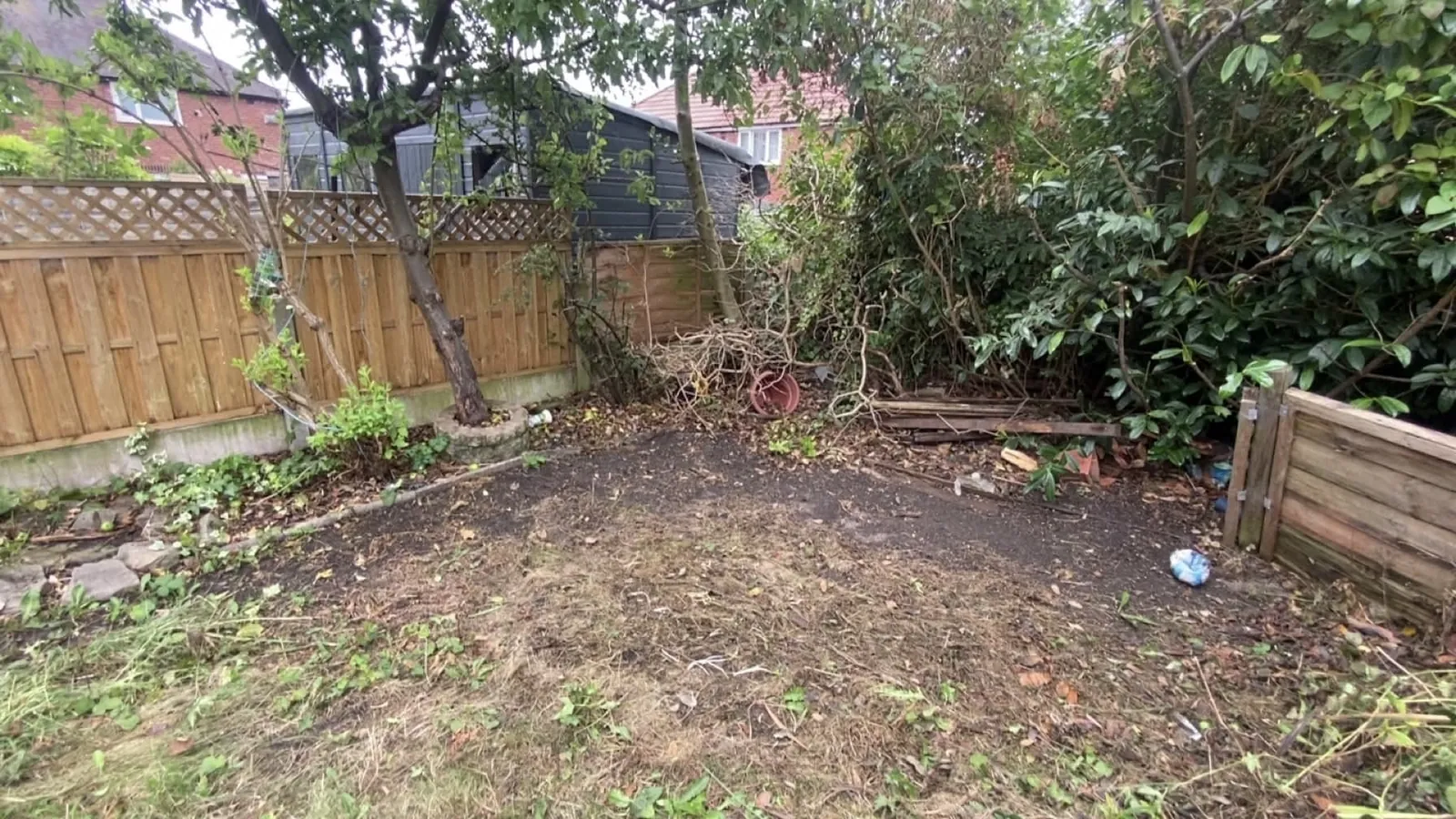
RGMS works with landlords, letting agents and property managers in Manchester and Stockport, including Levenshulme, Gorton and Reddish. Here is a hedge and border before and after a visit, and a back garden after a clear-out.
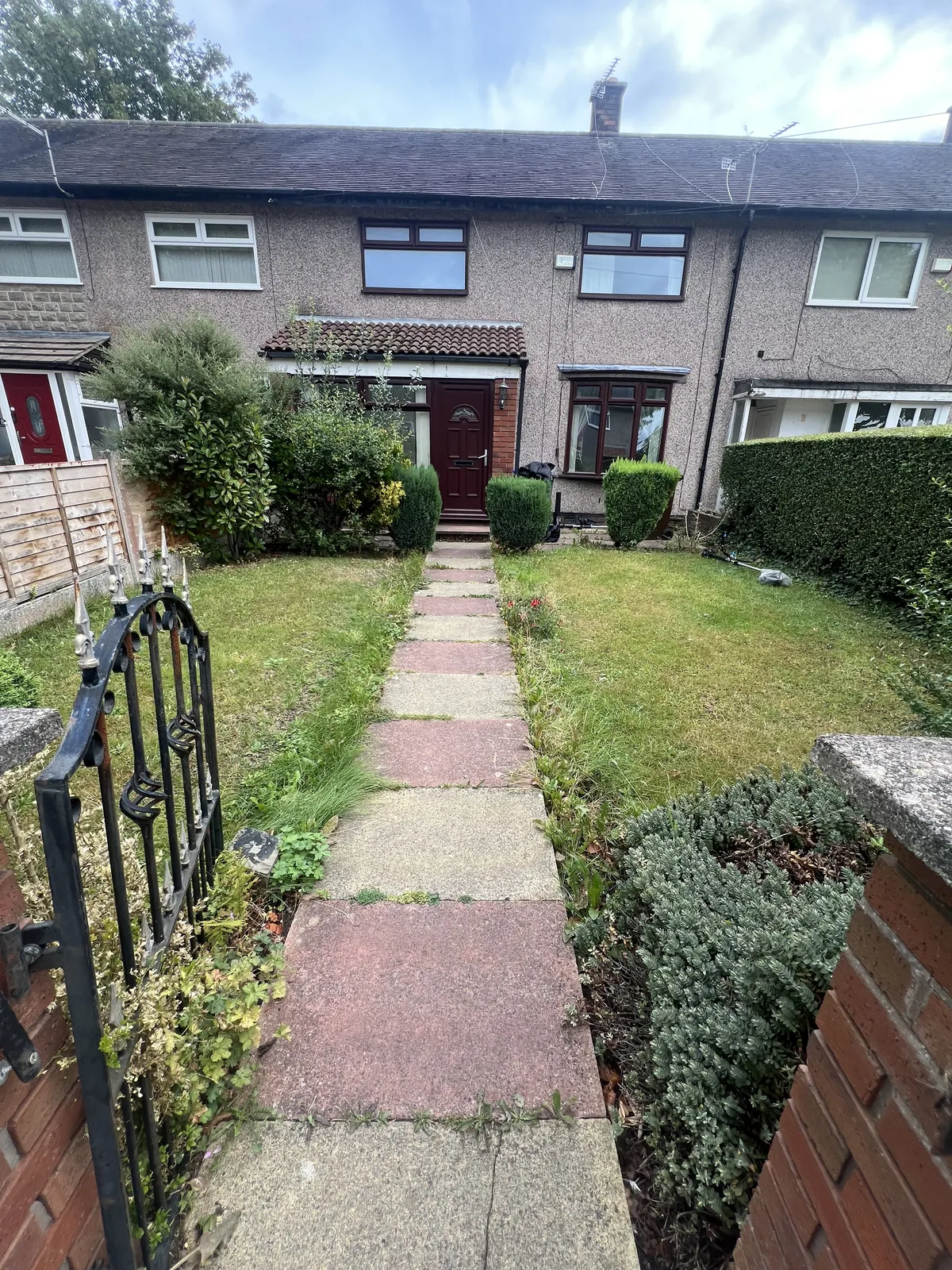
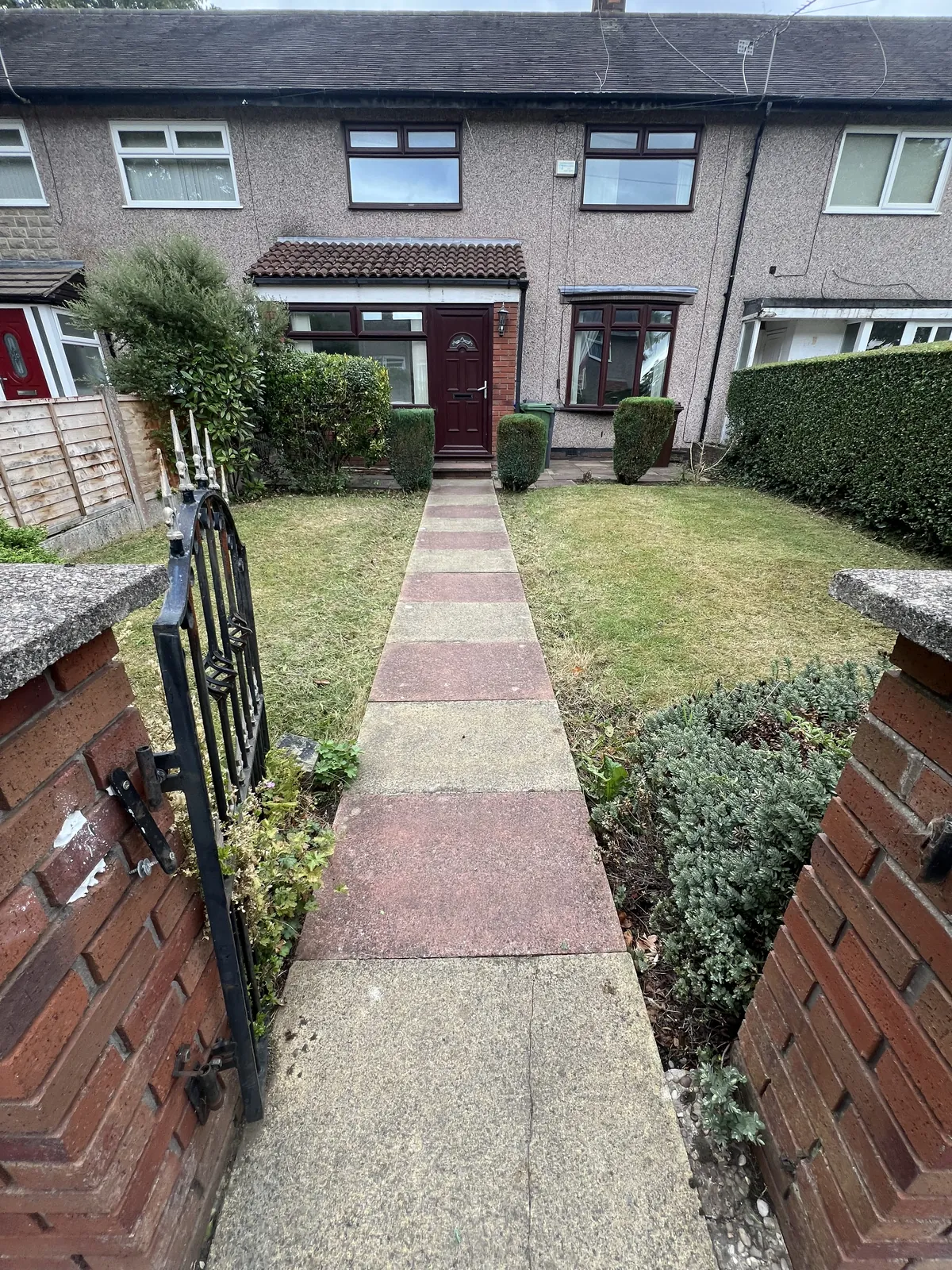
Before and after photos also matter because adjudicators compare the check-in and check-out evidence. Our garden tidying and clearance, hedge services and lawn services pages say what each visit covers, and our garden maintenance guide explains what regular visits include.
Rented garden questions
Is a tenant legally responsible for mowing the lawn?
Only if the tenancy agreement says so, or by the usual practice the NRLA describes: unless the agreement says otherwise, the tenant is usually responsible for basic maintenance such as weeding, pruning shrubs in borders, mowing the lawn and watering. Section 11 of the Landlord and Tenant Act 1985 does not mention lawns.
Who looks after large hedges and trees?
The NRLA says landlords are usually responsible for trees and climbing plants, and in most instances for large shrubs and hedges and removing the cuttings, though it calls this a grey area. Put it in the agreement so neither side is guessing.
Does the landlord have to provide a lawnmower?
No. The NRLA says a landlord has no legal responsibility to provide gardening tools. If you need one, ask before you move in. Any electrical equipment a landlord does supply should be in good repair and used with RCD protection.
Can a landlord take money from my deposit for the garden?
They can claim for garden work if you left it worse than at the start, allowing for seasonal growth, and they must back the claim with check-in and check-out evidence. Your deposit must be held in an approved scheme, and the landlord must return it within 10 days of you both agreeing the amount. If you disagree, it stays protected while the dispute is settled.
Who pays to repair a fence or paving?
Section 11 makes the landlord responsible for the structure and exterior of the home, and GOV.UK says landlords are always responsible for repairs to the property’s structure and exterior. Whether a particular fence or path counts depends on the item and your agreement. Report damage to the landlord in writing, and contact the council’s environmental health team if repairs are not done.
Can I change the garden in a rented house?
Not without asking. The NRLA says tenants must ask for permission before altering a rental garden, and that a landlord can charge for putting it back if they did not. Ask in writing, and keep the reply.
Sources
- Landlord and Tenant Act 1985, section 11, for the landlord’s repairing duties.
- GOV.UK: Private renting, repairs, for what landlords must repair, what tenants can be asked to do and what to do if repairs are not done.
- GOV.UK: Tenancy deposit protection, for the protection scheme, the 30-day and 10-day limits and the 1 May 2026 change to assured periodic tenancies.
- NRLA: The Landlord’s Essential Guide to Garden Maintenance (May 2022), for the usual split of garden jobs, the garden clause, dispute figures and inspection notice.
- Recycle for Greater Manchester: Garden waste, for what goes in the food and garden bin.
- Stockport Council: Green bin and food waste caddies, for the permit and branch limits.
Rules and pages checked on 8 October 2026. Your tenancy agreement and your council have the final say. If you manage rental homes and want the garden handled, see our property support service or get in touch.