
Most UK price guides put a garden clearance at about £150 to £300 for a small, lightly overgrown garden, £300 to £600 for a medium one and £600 to £2,000 or more for a large or heavily overgrown plot outside London. The guides do not all agree, though, and the figure that moves the bill most is the amount of waste taken away, not the size of the garden. This guide shows where the published figures differ, how to turn them into a sum for your own garden and what a fair quote should list. Our garden tidying and clearance service quotes free from photos, and none of the ranges below is an RGMS price.
What the published price guides say, side by side
We opened seven national price pages on 6 November 2026. Several give no date or author, so the table shows what each page itself states. Where a page gave no figure for a column, it says so.
| Source | Date shown on page | Small or light | Medium or moderate | Large or heavy | VAT stated? |
|---|---|---|---|---|---|
| Fantastic Services (rest of UK) | None; titled 2026 | £150 to £300 | £300 to £600 | £600 to £2,000+ | “Include VAT where applicable” |
| Bark | 13 May 2025 | £150 to £300 (up to 50 square metres) | £300 to £550 (50 to 100 square metres) | £550 to £1,000 (100 to 250 square metres) | Not mentioned |
| Trade2Base | 8 June 2026 | £150 to £300 | £300 to £600 | £600 to £1,500+ | Not mentioned |
| Housekeep (outside London) | Titled October 2026 | £70 to £90 | £90 to £130 | £130 to £160+ | Inc VAT |
| Airtasker | 12 August 2025 | £120 to £350 (“regular”) | £400 to £600 (“complex”) | No separate band | Not mentioned |
| Hamuch | 16 June 2025 | One range: £200 to £600 | Location table says excluding VAT | ||
| MyJobQuote | 14 October 2026 | No figures on the page, only a calculator showing £0 | Not mentioned | ||
Three of the seven (Fantastic Services, Bark and Trade2Base) agree closely on the small band at £150 to £300. That is the most defensible starting point for a small garden. Beyond it the guides drift apart, which is why a single national number is a poor guide to a quote you are about to accept.
Why the guides disagree, and which to trust
Housekeep’s page is the clearest case. Its top figure for a light clearance outside London is £90, which is below the bottom of every other small-garden band in the table (the lowest of them, Airtasker’s, starts at £120). The same page gives its overall range as £80 to £300+ in the body and £150 to £300+ in the short answer. A page that quotes two different overall ranges has not fixed which job it is pricing, so treat its band as a price for removing a few bags, not for clearing a garden.
Airtasker gives an hourly rate of £45 to £65 and regional averages from £180 in the North East to £250 in the North West and £400 in London, with no unit stated. Hamuch quotes £55 an hour and £330 a day, and a figure of £332 for Manchester that its table labels an average gardener pay rate, in a table headed as excluding VAT or call-out charges. That is a rate for a person, not a price for a job. Fantastic Services prices the first hour at £83 and later hours at £65.
Put those together and the pattern is clear. Some pages price the job, some price the hour and some price the person, and a few do not say which. Only compare a quote with a range that measures the same thing. If your quote is a fixed price for the whole job, compare it with the job bands. If it is hourly, compare it with the hourly rates and ask how many hours the job will take.
These figures are published estimates, not RGMS prices and not a promise of what any gardener will charge. We checked each page on 6 November 2026. Prices change, so use them to judge scale and then ask for a written quote.
What actually sets the price of a clearance
Two gardens the same size can cost very different amounts. Every guide we opened says the same thing: waste volume matters more than floor area. Trade2Base says it directly, and Housekeep says the cost “will mostly depend on the amount of waste that needs removing”. Use the table to describe your garden to whoever is quoting.
| Factor | Why it changes the price | What to send |
|---|---|---|
| Volume of waste | Disposal is charged by the load, bag or skip, so more waste means more trips and more cost | Photos of the thickest growth and any heaps |
| Type of waste | Soil, rubble, paving and treated timber are heavy and cost more to dispose of than green waste | A note of what is not plants |
| How overgrown | Brambles, ivy and young trees take much longer to cut out than lawn | How long it has been left, and whether you can see the ground |
| Bulky items | Sheds, furniture and old decking are separate jobs | A list with rough sizes |
| Access | Carrying waste through a house or down a narrow alley adds labour time | Where a van can park and how the garden is reached |
| Time of year | Housekeep says gardeners are in higher demand in spring and summer and usually charge more | Whether the date is flexible |
| Hazards | Invasive plants and sharps need separate handling and are not part of an ordinary quote | Anything you know or suspect is there |
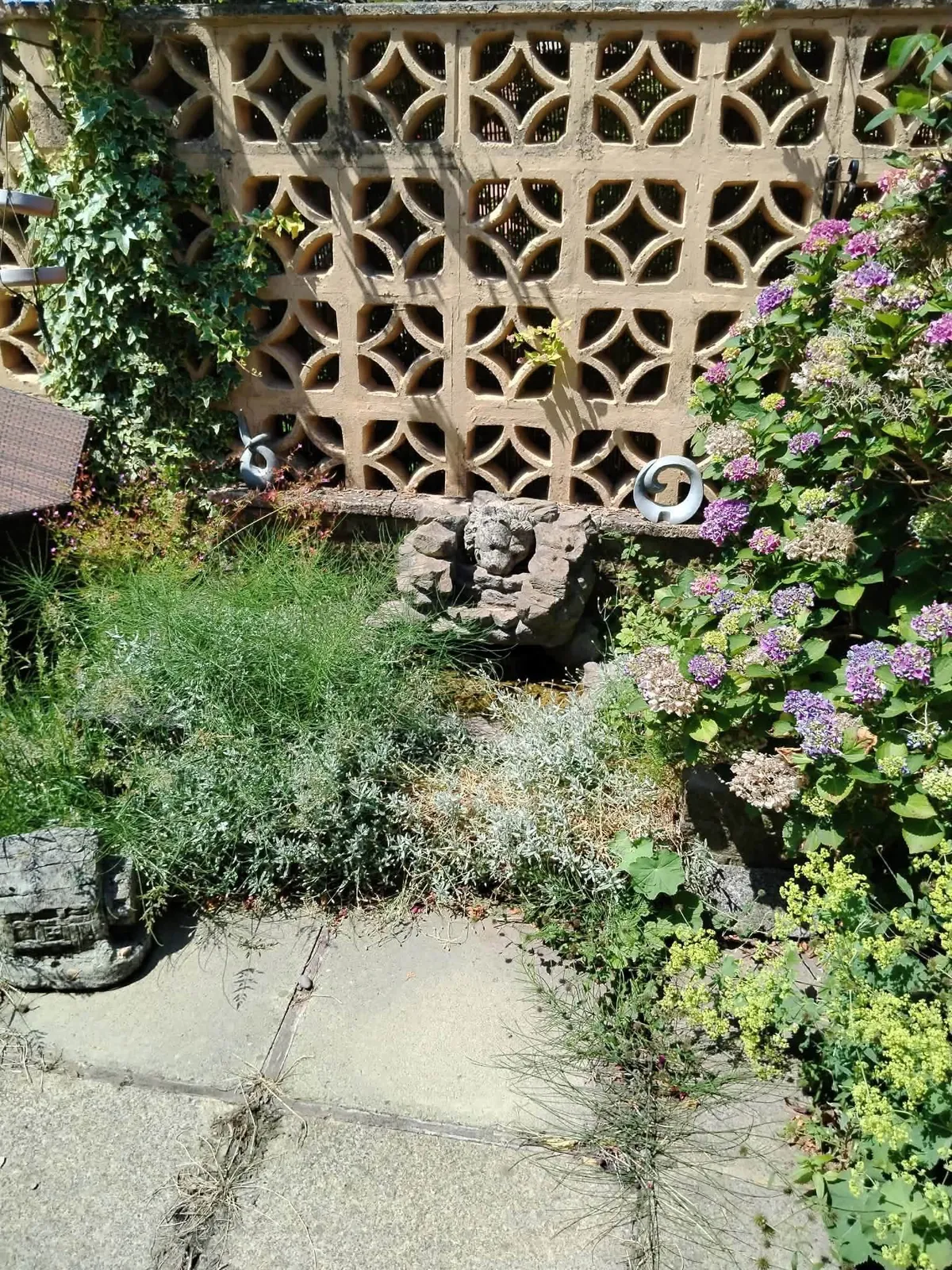
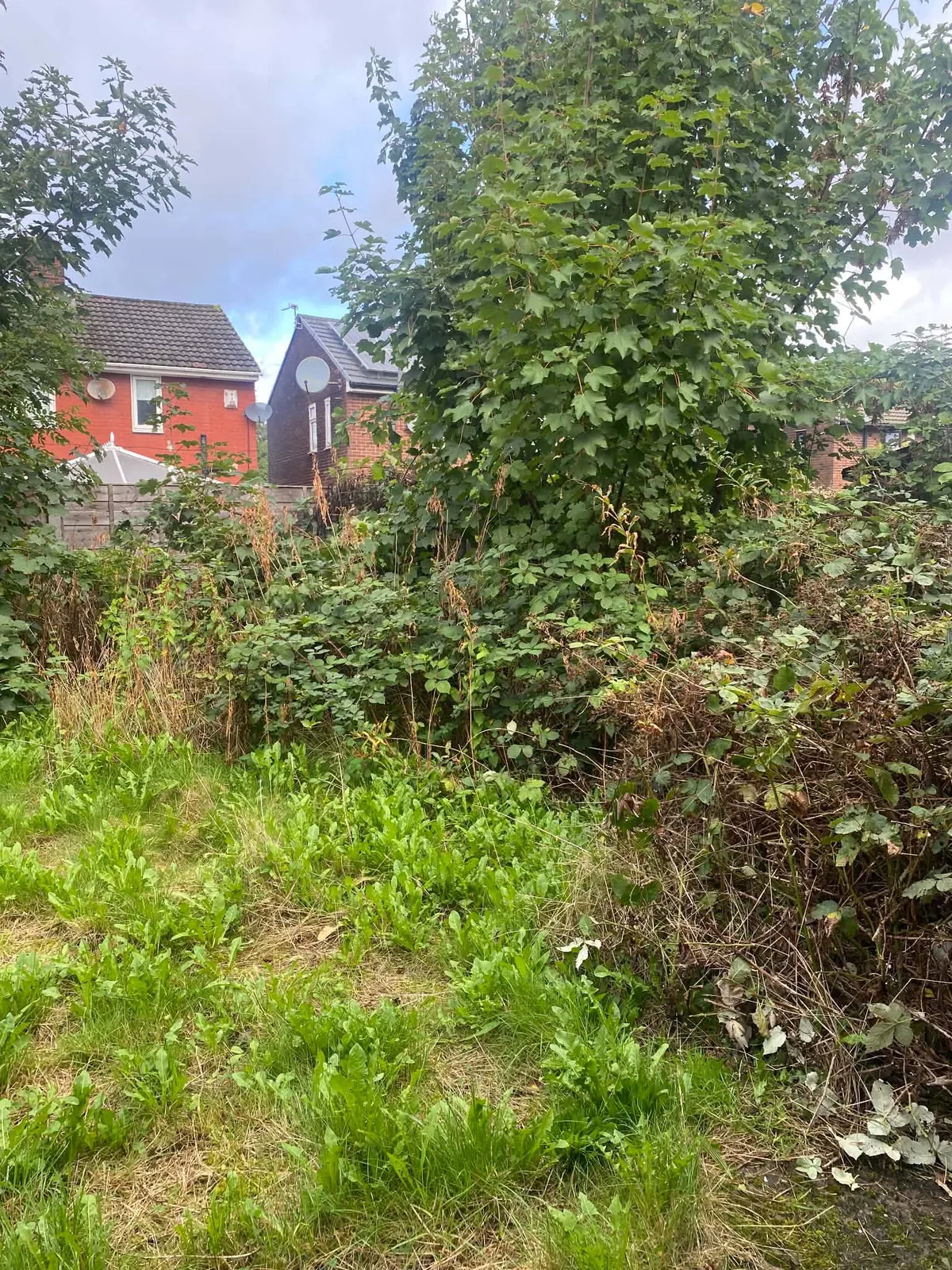
Two of the photos in this guide show gardens before work: a paved corner with ground cover spilling over the edges, and a lawn edge with dense scrub and a young tree behind it. The second produces several times the waste of the first, even if the plot is no bigger, and it is the second kind of garden that sits in the heavy band.
Worked sums: from published figures to a budget
A range is only useful once you can turn it into a sum. The two examples below use published figures and show the arithmetic. They are illustrations, not quotes.
Sum 1: a two-person day plus a skip
Trade2Base gives a two-person team at £350 to £550 a day. Fantastic Services puts a builder’s skip (6 to 8 cubic yards) at £200 to £350. Neither page says its figures include VAT, so the sum is shown both ways.
- Low end: £350 + £200 = £550. Add 20% VAT (£110) and it is £660.
- High end: £550 + £350 = £900. Add 20% VAT (£180) and it is £1,080.
So a one-day, two-person job with a skip for the waste lands between £550 and £900 before VAT. That sits inside the £300 to £600 medium band at the bottom and the £600 to £2,000 heavy band at the top, which is what you would expect from a day of work on a garden that is part-way between the two.
Sum 2: six hours at two published hourly rates
Fantastic Services charges £83 for the first hour and £65 for each later hour, so six hours is £83 + (5 × £65) = £83 + £325 = £408. Airtasker’s £45 to £65 an hour gives £270 to £390 for the same six hours. Add a midi skip at £150 to £250 (Fantastic Services) and the totals are £558 to £658 and £420 to £640.
The gap between £270 and £408 for the same six hours is the reason to ask what an hourly rate includes: the person, a second person, the van, tools and waste disposal.
VAT: ask, and ask for it as a line
GOV.UK gives the standard rate of VAT as 20%, and says a business must register if its VAT taxable turnover is more than £90,000. A gardener under that figure does not have to register, so some honest quotes carry no VAT at all, and others show it. On a £600 quote that is the difference between paying £600 and paying £720 (£600 + £120). Neither is wrong. They cannot be compared until you know which you are looking at, so ask for the total including VAT, shown as its own line or marked “no VAT charged”.
Where the waste goes, and why a very low quote is a warning
Waste is the line most quotes hide (our garden tidy up checklist covers the same walk-round), and it is the one that can leave you exposed if it is handled badly. The public recycling centres are not a free route for a gardener. Recycle for Greater Manchester says its sites are for household waste only, with “strictly no trade waste”, and that if you are having work done by tradespeople, the waste is classed as trade waste and is chargeable. Gardeners cannot use the household sites for it. It must go to a trade waste facility or a skip, and the cost may be part of the service charge. A quote that seems to leave disposal out is therefore either charging for it somewhere else or doing something with the waste you should ask about.
Anyone carrying waste for a business must be registered. GOV.UK says you must register if your business transports waste, and failing to register can bring an unlimited fine. The register is public. The GOV.UK waste duty of care code of practice gives householders a limited duty: take all reasonable measures to make sure your household waste goes only to an authorised person, and check they hold up to date, valid upper tier registration. It also says there is no legal requirement to keep records of that check, but a receipt and a note of the registration number help if the waste is later fly-tipped and investigated.
The wording matters, and some price guides get it wrong by calling carrier registration a licence. It is a registration, with upper tier and lower tier types. GOV.UK says upper tier registrations are renewed every three years at £130.25. Registration numbers begin with CB.
Verify it yourself: four checks before you pay
- Ask for the registration number.
Any business taking waste away should be able to give you one, starting with CB.
- Look it up on the register.
The Environment Agency public register lets you search by business name or registration number, and choose upper tier or lower tier.
- Check the name matches the quote.
The name on the register should be the business you are paying. If it is someone else, ask why.
- Keep the evidence.
Save the written quote or receipt, the registration number and a screenshot of the register entry. The code of practice suggests this, though it does not require it.
This is a way for you to check any trade, ours included. It says nothing about any one business.
Jobs that are not an ordinary clearance
If the garden will need regular visits afterwards, garden care, weed control and lawn services are priced separately, and our landscaping cost guide shows the same sourced approach for bigger projects. Two situations are worth raising before the quote, because they change the job.
Invasive plants. GOV.UK says you must not plant in the wild, or cause to grow in the wild, invasive non-native plants, and that this can include moving contaminated soil or plant cuttings. Soil containing Japanese knotweed or its rhizome has its own disposal rules, and off-site disposal needs a registered waste carrier and an authorised site. If you think you have knotweed, say so and have it quoted separately. It is not something a standard clearance price covers.
Nesting birds. Section 1 of the Wildlife and Countryside Act 1981, as it applies in England and Wales, makes it an offence for a person who intentionally takes, damages or destroys the nest of any wild bird while that nest is in use or being built. The Act does not set a calendar ban on cutting. A careful gardener checks for active nests first and may stop or delay work, which can change the timing of a quote. Thick growth in spring and summer is the usual place for a nest, so ask how they check. Leaves and light debris in autumn are a lighter job, covered in our leaf clearance guide.
Compare quotes like for like: the seven lines a quote should show
A fair quote lets you see what you are buying. Ask for these, in writing, before you compare totals.
- The jobs, named.
Cutting back, digging out, removing sheds or furniture, hedge work. If it is not listed, assume it is not included.
- Fixed price or hourly.
If hourly, how many hours, and how many people.
- Waste.
Who takes it, how it is carried, where it goes and whether the cost is in the price or extra.
- Carrier registration number.
For the business named on the quote.
- Skip or permit costs.
Fantastic Services puts a council permit at around £30 to £60 if a skip stands on a public road, so ask who arranges and pays for it.
- Making good.
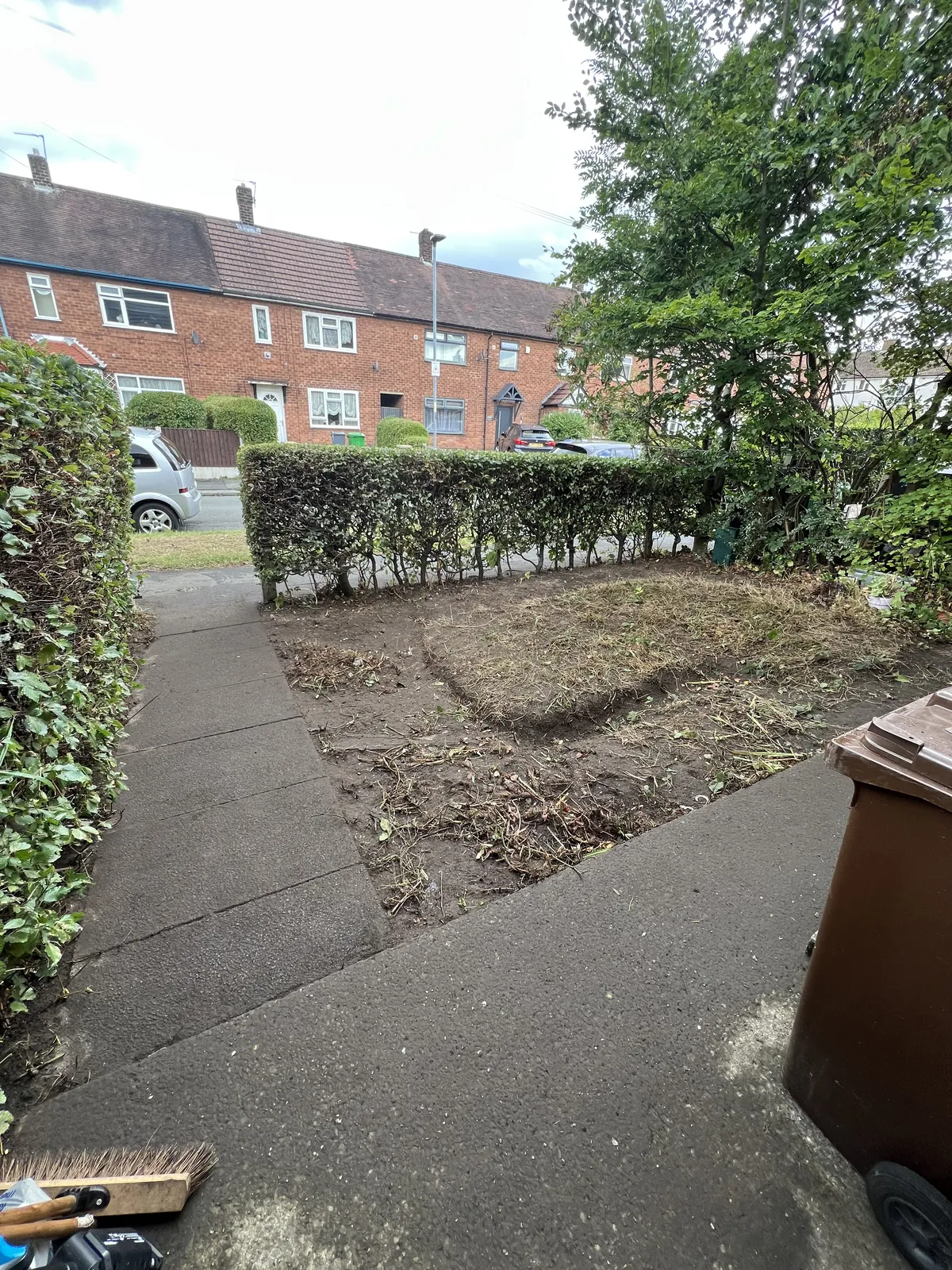
Raking, levelling, or leaving bare soil. The last photo in this guide shows a finished clearance with bare soil, so say what finish you expect.
- The total including VAT.
As its own line, or a clear statement that no VAT is charged.
If you never agree a price, the Consumer Rights Act 2015 treats the contract as including a term that you pay a reasonable price and no more, and section 51 says what counts as reasonable is a question of fact. That is a fallback, not a plan. Agree the price in writing first.
What to send for a fixed quote
You will get a closer figure faster if you send the same few things to every business you ask. A quote based on photos is only as good as the photos, so take some from the house and some at the thickest growth.
- Photos of the whole garden from the house, and of the thickest growth, any heaps and any bulky items.
- The address, and how the garden is reached: through the house, a side gate or a shared alley.
- A list of what you want cleared and what must stay.
- Any soil, rubble, paving, treated timber or suspected invasive plants.
- A target date, and how flexible it is.
For examples of what these jobs look like from start to finish, see our overgrown garden clearance case study, our Bredbury clearance case study and our garden clearance cost guide for Levenshulme, which covers skip permits and access in more detail. When you are ready, our garden tidying and clearance page has the free quote form. Send the photos and we will say what the job involves before you decide.
Garden clearance cost questions, answered
How much does a garden clearance cost in the UK?
Fantastic Services, Bark and Trade2Base all give £150 to £300 for a small garden. Medium gardens run £300 to £600, and heavy ones £550 to £2,000 or more depending on the guide. These are published estimates, not RGMS prices. Waste volume is the biggest driver.
Why do price guides give such different figures?
Some price the whole job, some the hour and some the person, and a few do not say which. Housekeep's light clearance band of £70 to £90 is below every other small-garden band we opened, which start at £120 or £150.
Does a garden clearance quote include VAT?
It depends on the business. GOV.UK gives the standard rate as 20% and says a business must register if its taxable turnover is more than £90,000. A £600 quote becomes £720 with VAT. Ask for the total including VAT as its own line.
Can a gardener take my garden waste to the council tip?
Not as household waste. Recycle for Greater Manchester says its sites take household waste only, with strictly no trade waste, and that work done by tradespeople counts as trade waste. The waste must go to a trade waste facility or a skip.
How do I check a waste carrier is registered?
Ask for the registration number, which starts with CB, and search the Environment Agency public register by business name or number. Keep the quote, the number and a screenshot. The code of practice suggests keeping evidence but does not require it.
What if we never agreed a price?
Section 51 of the Consumer Rights Act 2015 treats the contract as including a term that you pay a reasonable price and no more, and what is reasonable is a question of fact. Agree the price in writing before work starts.
Do brambles and knotweed cost extra?
Dense brambles raise the waste volume and labour time. Japanese knotweed is different: GOV.UK says soil containing it has its own disposal rules, so have it quoted separately from an ordinary clearance.
Sources
Every page below was opened on 6 November 2026. Where a page gave no publication date, we say so in the text above.
- Fantastic Services: How much does garden clearance cost? 2026 UK price guide (no date or author on the page)
- Bark: guide to garden clearance costs (13 May 2025)
- Trade2Base: garden clearance costs UK (8 June 2026)
- Housekeep: how much does garden clearance cost? (titled October 2026)
- Airtasker: garden clearance cost (12 August 2025)
- Hamuch: garden clearance cost (16 June 2025)
- MyJobQuote: garden clearance cost calculator (14 October 2026)
- GOV.UK: VAT rates and VAT registration thresholds
- GOV.UK: Waste duty of care code of practice
- GOV.UK: Waste carrier, broker or dealer registration
- Environment Agency: public register of waste carriers, brokers and dealers
- GOV.UK: Prevent the spread of harmful invasive and non-native plants
- Recycle for Greater Manchester: van permits and trade waste
- legislation.gov.uk: Wildlife and Countryside Act 1981, section 1
- legislation.gov.uk: Consumer Rights Act 2015, section 51