
Fallen leaves do their damage in four places: on the lawn, on paths and steps, in drains and downpipe grates, and in ponds. Clear those every week or two while the trees are dropping, leave a pile in a quiet border for wildlife, and get the rest into your green bin or a leafmould heap. If you would rather hand the whole job over, our garden tidying and clearance service covers leaves, beds and paths across Manchester and Stockport in one visit.
Where leaves cause problems, and what to do about each
Not every leaf needs moving. A layer under shrubs in a border is doing no harm, and some of it is doing good. The leaves worth chasing are the ones sitting on grass, on surfaces people walk on, and anywhere water needs to drain away. Each row below comes from the guidance listed at the end of this article, checked on 9 October 2026.
| Where they land | What goes wrong | What to do | How often |
|---|---|---|---|
| Lawn | Leaves block light and moisture, and the grass underneath weakens | Rake, blow or mow them up | Every week or two while they fall |
| Patio, paths and steps | Wet leaves turn slippery and stain paving | Sweep or blow into a pile and lift | Weekly, more often after wind and rain |
| Drain grates and downpipe shoes | Leaves mat over the grate and water backs up across paving | Lift the leaves off by hand and check the water runs | After every heavy fall |
| Ponds | Leaves sink, rot and feed algae and duckweed | Net the pond, or fish leaves out before they sink | Through autumn and winter |
| Under roses and fruit trees with leaf spots | Black spot and scab spend the winter on the fallen leaves | Collect and bin them, not the leafmould pile | As they drop |
| Beds and borders | Very little. A thin layer protects soil | Leave most of it, and keep one pile for wildlife | Pull leaves off small plants only |
The short version: grass, hard surfaces, drains and ponds get cleared, borders mostly do not.
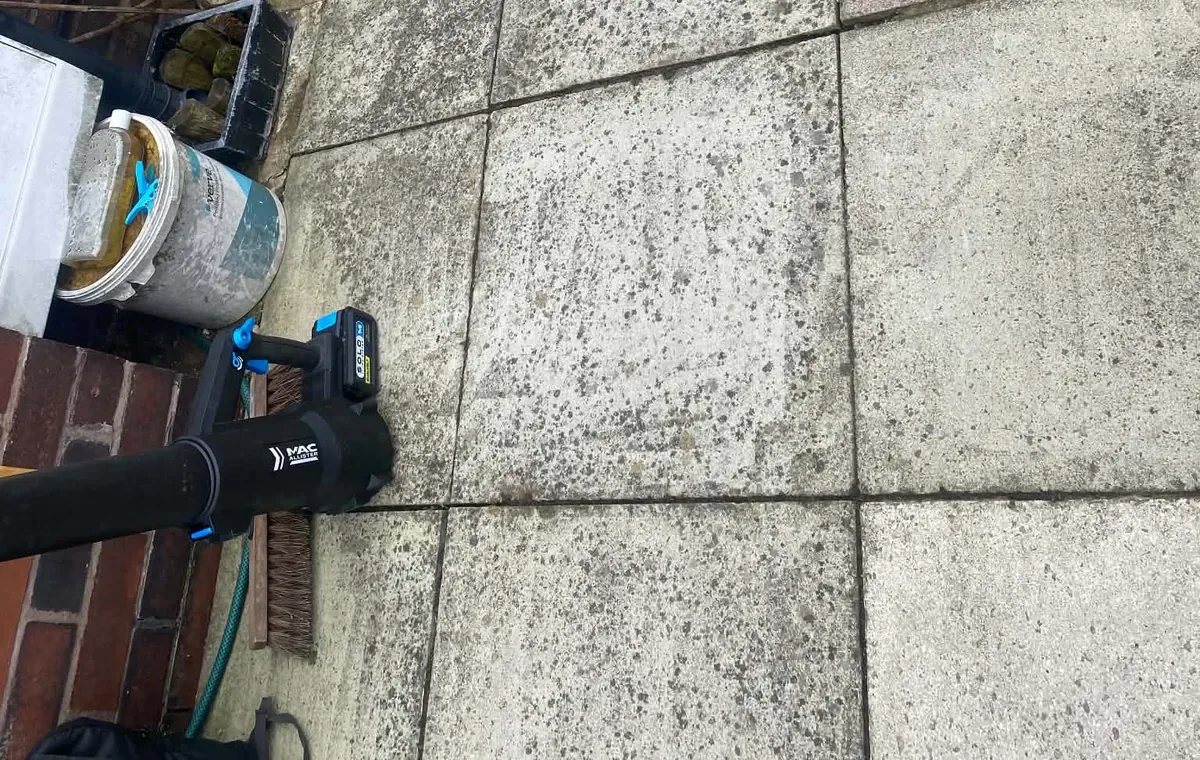
How often to clear leaves between October and December
Leaf fall is not one event. Different trees drop at different times, and wind brings leaves in from neighbours and the street. One big clear-up in late November leaves the lawn covered for weeks before it, and the bottom layer will already have done its damage.
The Royal Horticultural Society (RHS) puts removing fallen leaves from lawns on its list of October jobs, so the grass is not smothered. In practice that means a light clear every week or two from the first proper fall until the trees are bare. A light clear takes a fraction of the time of a heavy one, because dry, loose leaves move easily and a wet, packed layer does not.
Three things should make you go out sooner than planned:
- A windy night. Wind piles leaves against fences, doors and drain grates, which is exactly where they cause trouble.
- Heavy rain forecast. Leaves on a grate before a downpour mean water pooling on the patio or against the wall.
- Visitors, deliveries or tenants using a path. A path that is fine for you can catch out someone who does not know it.
Pick a dry, still day when you can. The RHS notes that leaves are easier to collect when the weather is dry and still, and that if it is windy you should rake in the direction the wind is blowing.
Lawns: rake, blow or mow
The RHS says raking is the best option for clearing a lawn, and that on large lawns a leaf blower makes the job much easier. There is a third route that suits most back gardens in Manchester and Stockport.
Mowing them up. The RHS suggests collecting leaves from the lawn with a rotary mower. It chops them up, which speeds up rotting, and mixes in grass clippings, which makes better leafmould. It works when the leaves and grass are dry and the mower has a collection box. Set the blades high: autumn is not the time to cut short, and our autumn lawn care guide covers mowing height and the other jobs that follow.
Raking. A spring-tine or wide plastic rake moves leaves without tearing the grass. Rake into a few small piles rather than one big one, then lift them with two boards or your hands in gloves. The RHS describes leaf boards as two flat pieces of plywood or plastic, which let you pick up far more in one go than a shovel.
Blowing. A blower is quickest on large lawns and paving, but it only moves leaves. They still need lifting at the end, and blowing into a border just stores the problem for the next wind. Point it away from neighbours' gardens and do not use it early in the morning.
Whatever you use, lift the piles the same day. A heap left on the grass blocks even more light than the scattered leaves did.
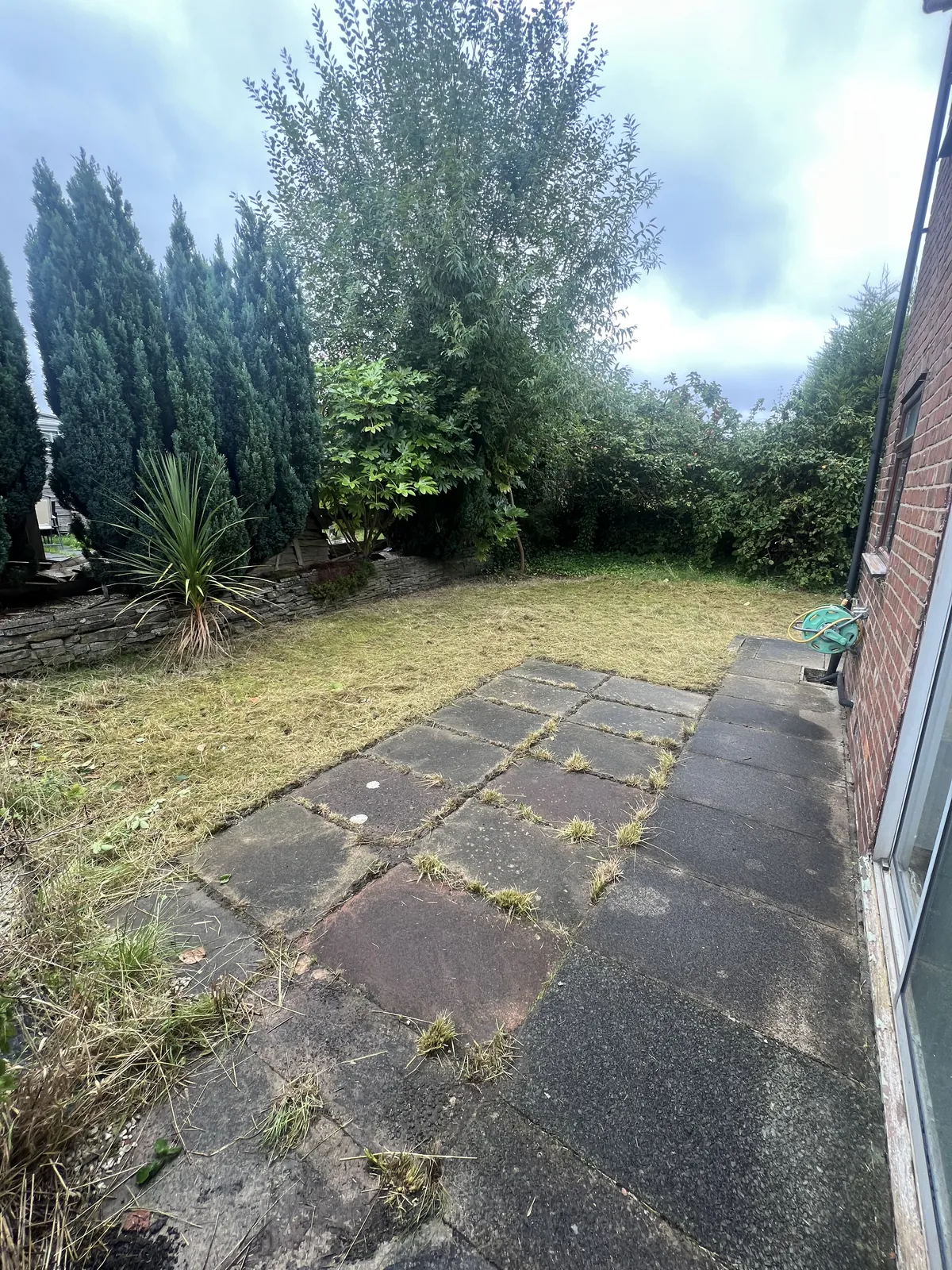
Patios, paths and steps
Hard surfaces are where leaves turn from untidy to risky. Wet leaves on stone, block paving or timber decking are slippery underfoot, and they hold water against the surface, which is how the dark stains and green film on many patios start.
A stiff broom and a dustpan or boards do most paths. On a larger patio, a blower moves everything into one corner in a few minutes. Clear the edges and corners, because that is where leaves collect and where people step when they move aside for someone else.
For landlords, letting agents and anyone running a business with a path, there is also a legal angle. Under section 2 of the Occupiers' Liability Act 1957, the occupier of premises owes visitors a "common duty of care", which means taking such care as is reasonable in the circumstances so that visitors are reasonably safe. The Act does not mention leaves. What counts as reasonable depends on the site, but a regular clearing routine, written down, is far easier to point to than nothing. This is general information, not legal advice. For rented homes, who is expected to do this depends on the tenancy, which we cover in our guide to who is responsible for the garden in a rented property.
Once the leaves are off, any stains and algae left behind are a cleaning job rather than a clearing one. That is a separate visit, and our patio and path cleaning covers it. Clearing first and cleaning second gives a better result than trying to do both at once.
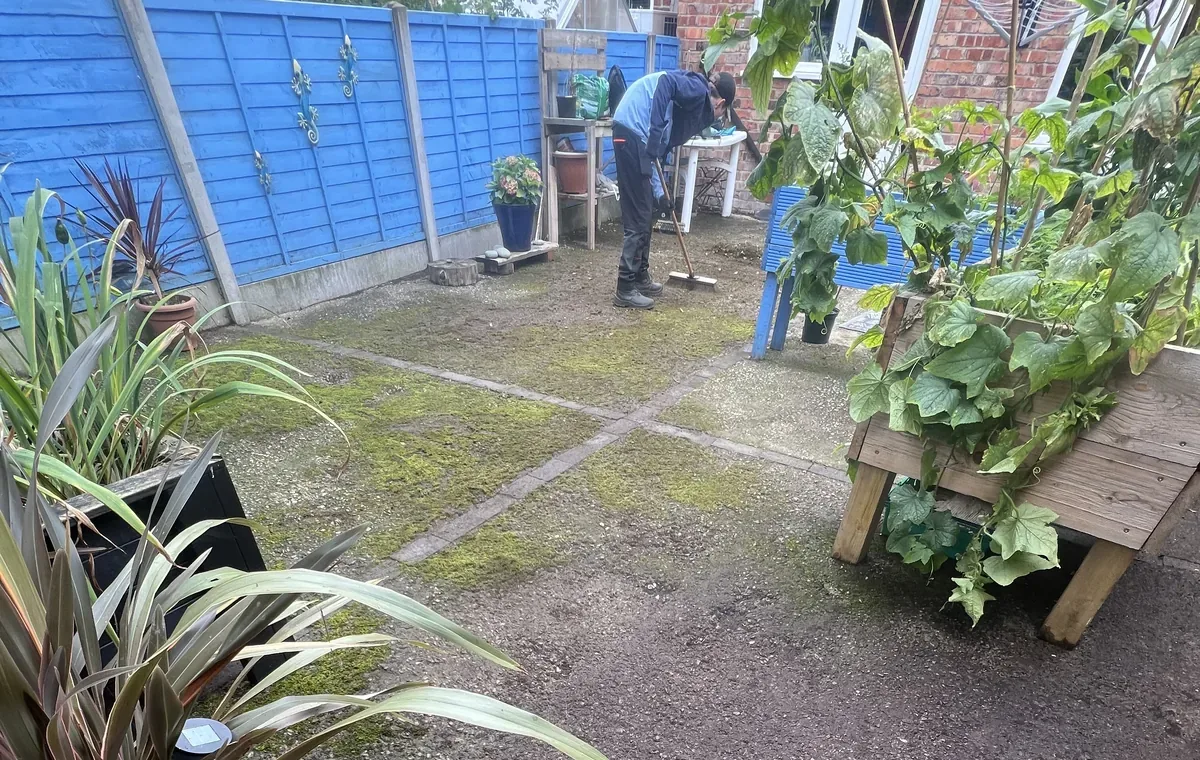
Drains, downpipes and gutters
A drain grate covered with a mat of wet leaves stops working almost completely. Water then runs across the patio, pools against the house or freezes on the path on the first cold night. The fix is simple and takes seconds: lift the leaves off by hand in gloves, bag them, and pour a bucket of water down to check it drains.
Check these at ground level every time you clear the garden:
- Yard gullies and drain grates on patios and driveways.
- The open shoe or grate at the bottom of each downpipe.
- Channel drains across the front of garages and back doors.
- The base of side passages, where wind funnels leaves into a pile.
Gutters are a different matter, because they mean working at height. If water is spilling over a gutter in rain, or a downpipe stays dry when it should be running, the gutter is probably blocked. Unless you are confident on a ladder with someone footing it, leave that to someone with the right access equipment. A blocked drain under the ground, rather than leaves on top, is a job for a drainage company.
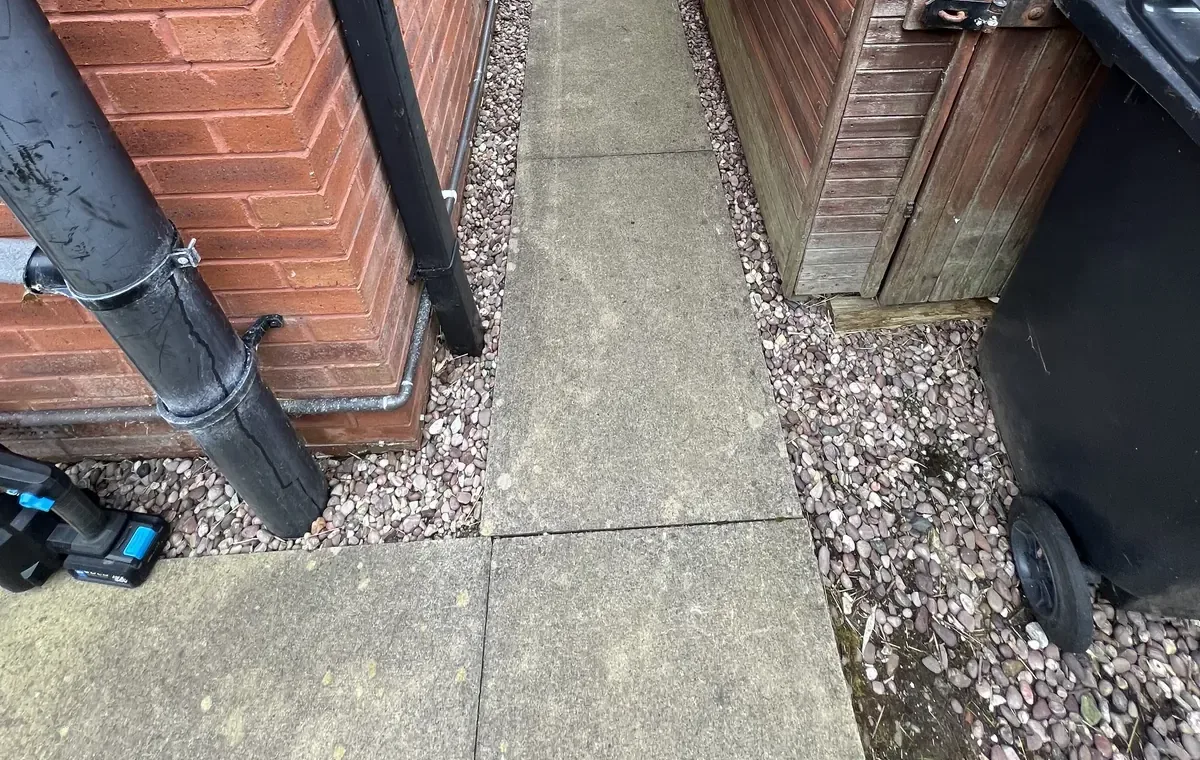
Borders and ponds
Borders. A layer of leaves under shrubs and between established plants protects the soil over winter and slowly rots in. You do not need to clear it. The exceptions are small or evergreen plants that leaves can bury, alpines and low ground cover, and anything showing leaf disease (see the next section). Lift leaves off those by hand and leave the rest.
Ponds. The RHS advises placing nets over ponds to stop autumn leaves falling in. Leaves that sink rot on the bottom, release nutrients and encourage algae and duckweed. If you have no net and leaves have already landed, scoop them out with a fine net before they sink. For debris cleared out of a pond, the RHS advises leaving it on the side for 48 hours before composting so any wildlife can get back into the water.
What to leave, and what to bin rather than compost
Leave a pile for wildlife. Hedgehog Street, the hedgehog campaign run with the People's Trust for Endangered Species, says leaf piles provide important hibernation sites for hedgehogs and that hedgehogs are picky about nest material, so there should always be dead leaves somewhere in the garden. A pile in a quiet corner behind a shed or under a hedge is enough. It also advises checking piles and long grass carefully before strimming or mowing, and checking any bonfire heap before lighting it. Hedgehogs can stay active well into November and December, so a pile that was empty last week may not be now.
Bin leaves from diseased plants. Some fungal diseases live through the winter on fallen leaves and reinfect the plant in spring. The RHS says rose black spot spends the winter on fallen leaves and advises collecting and destroying them in autumn, or burying them under a layer of mulch. It says the same of apple and pear scab: disposing of fallen leaves reduces the fungus available to start infections next season. Keep those leaves out of the leafmould pile and put them in the green bin instead, where they go to commercial composting.
Do not burn them. Damp leaves smoulder and smoke. GOV.UK says you should get rid of garden waste by composting or recycling it, that you could be fined if smoke drifts across a road and becomes a danger to traffic, and that councils can act against bonfire smoke that is a statutory nuisance.
Where the leaves go in Manchester and Stockport
Recycle for Greater Manchester says leaves can be recycled in your food and garden bin at home, or taken to a recycling centre. The rules for that bin differ by council, and soil is not accepted in it anywhere: take soil to the tip. These are the two we cover most:
| Route | Manchester | Stockport | Good for |
|---|---|---|---|
| Green bin | Food and garden bin. The council lists grass cuttings, hedge clippings, twigs and branches | Garden waste only with a permit: £59 for 1 April 2026 to 31 March 2027, £39 with Council Tax Support | Normal autumn volumes and diseased leaves |
| Recycling centre | Garden waste taken at Greater Manchester recycling centres | Same: garden waste taken at Greater Manchester recycling centres | A big one-off clear-out that will not fit the bin |
| Leafmould | Free, in a wire cage or pierced bags. Takes about two years | Same: free, and no permit needed | Healthy leaves, if you have a corner to spare |
| Compost heap | Shred thick or evergreen leaves first (sycamore, horse chestnut, laurel, holly) | Same | Mixed garden waste |
| Bonfire | Not recommended. Smoke can be a statutory nuisance | Same | Nothing |
Making leafmould. The RHS says oak, beech and hornbeam leaves make the best leafmould with little help, while thick leaves such as sycamore, walnut and horse chestnut should be shredded first or go on the compost heap. Avoid leaves swept up beside main roads, which can carry pollution and litter. Put the leaves in bin bags, wet them if dry, pierce holes, tie loosely and stack them out of sight, or build a simple chicken-wire cage. The RHS says leafmould under two years old can be used as a mulch, soil improver or autumn top dressing for lawns, and well-rotted leafmould over two years old can go into seed and potting mixes.
A leaf clear-up, in order
Working in this order means you never clear the same spot twice in one session.
- Check piles before you start
Look into leaf heaps, long grass and anything you plan to burn or move, in case a hedgehog has moved in.
- Pick off diseased leaves first
Bag rose and fruit tree leaves showing black spot or scab separately, so they go in the green bin and not the leafmould.
- Clear the lawn
Rake, blow or mow onto the paving, working towards one collection point. Keep the mower blades high.
- Clear beds lightly
Lift leaves off small plants and evergreens only. Leave the rest, and keep one wildlife pile.
- Sweep paths, steps and the patio last
Everything from the lawn and beds ends up here, so it gets cleared once, at the end.
- Clear grates and downpipe shoes
Lift leaves off by hand and pour water down to check each one drains.
- Sort the waste
Healthy leaves to leafmould, the rest to the green bin, and any overflow to a recycling centre.
- Book the next clear
Put a reminder in for one or two weeks' time until the trees are bare.
Do it yourself or book it?
For a small garden with one or two trees nearby, leaf clearing is a straightforward weekend job: a rake, a broom, gloves and some bags. Most people manage it themselves, and a leafmould cage pays you back with free mulch in a year.
It starts to make sense to book help when one or more of these apply:
- Large trees overhang the garden, so the leaves keep coming for eight weeks or more.
- The leaves are only part of it: beds need cutting back, hedges need a last trim, and the patio needs cleaning too.
- There is more waste than your bin can take, and no way to get it to a recycling centre.
- Paths are used by tenants, customers or visitors and need clearing on a schedule, not when you get round to it.
- Mobility, time or a long drive away makes weekly visits unrealistic.
When you get quotes, the price is set by the size of the garden, how many trees drop onto it, access for bags and machines, whether waste is taken away, and whether it is one visit or several through the season. Ask each company to say clearly whether waste removal is included and how many visits the price covers.
Our autumn garden tidy clears leaves from lawns, beds, paths and patios and can take the waste away, as quoted. If you already have someone cutting the grass, adding leaf clearing to regular garden care visits is often the simplest route. Our garden maintenance guide sets out what those visits cover through the year, and our lawn services pick up any damage the leaves have already done. We work across Manchester and Stockport, including Levenshulme, Gorton and Reddish.
Leaf clearance questions
How often should I clear leaves from my lawn?
Every week or two while the trees are dropping, from the first proper fall until they are bare. The RHS lists removing leaves from lawns as an October job because a layer of leaves blocks light and moisture from the grass. Light, regular clears are quicker than one big one, because dry, loose leaves move easily.
Can I put leaves in my green bin in Manchester or Stockport?
Recycle for Greater Manchester says leaves can go in your food and garden bin. In Manchester the green bin takes food and garden waste. In Stockport you need a garden waste permit to put garden waste in the green bin, which costs £59 for April 2026 to March 2027, or £39 with Council Tax Support.
Is it better to rake, blow or mow up leaves?
The RHS says raking is the best option on lawns and a leaf blower makes large lawns easier. It also suggests collecting leaves with a rotary mower, which chops them so they rot faster. Mowing suits dry leaves on a lawn with the blades set high. Blowing suits paving, but the leaves still need lifting at the end.
Should I leave some leaves for wildlife?
Yes. Hedgehog Street says leaf piles are important hibernation sites for hedgehogs and that there should always be dead leaves somewhere in the garden. Keep one pile in a quiet corner, and check piles and long grass before you strim, mow or light a bonfire.
Can I burn fallen leaves?
It is not a good idea. GOV.UK says to get rid of garden waste by composting or recycling it, that you could be fined if smoke drifts across a road and becomes a danger to traffic, and that the council can act against bonfire smoke that is a statutory nuisance.
Which leaves should not go on the leafmould pile?
Leaves from roses with black spot and from apples or pears with scab, because the RHS says those fungi survive the winter on fallen leaves. Collect them and put them in the green bin. Thick leaves such as sycamore and horse chestnut, and evergreens such as laurel and holly, are better shredded and composted. Avoid leaves from beside main roads.
Sources
- RHS: Jobs for October, lawns, for removing leaves from lawns, raking and leaf blowers.
- RHS: Leafmould, for collecting leaves, mowing them up, leaf boards, which leaves to shred, roadside leaves and how long leafmould takes.
- RHS: Rose black spot, for the fungus overwintering on fallen leaves and collecting them in autumn.
- RHS: Apple scab and pear scab, for disposing of fallen leaves to reduce infection.
- RHS: Jobs for October, ponds, for netting ponds against autumn leaves.
- Hedgehog Street: Help hedgehogs this autumn, for leaf piles as hibernation sites and checking bonfires and long grass.
- Recycle for Greater Manchester: Leaves, for leaves in the food and garden bin and at recycling centres.
- Manchester City Council: Green bins, for what goes in the food and garden bin.
- Stockport Council: Green bin and food waste caddies, for garden waste only with a permit, and the size limit for branches.
- Stockport Council: Buy a garden waste permit, for the £59 and £39 permit prices for 2026 to 2027.
- GOV.UK: Garden bonfires, the rules, for disposing of garden waste and bonfire smoke as a statutory nuisance.
- Occupiers' Liability Act 1957, section 2, for the common duty of care owed to visitors.